Why Your Body Was Built for This: The Real Science of Nature, Stillness, and Healing
What happens in your body the moment you step outside — and why it's not "just fresh air"
by The Cannabis Nurse · Theresa Strahan, BSN, RN, CNHC
Read on Medium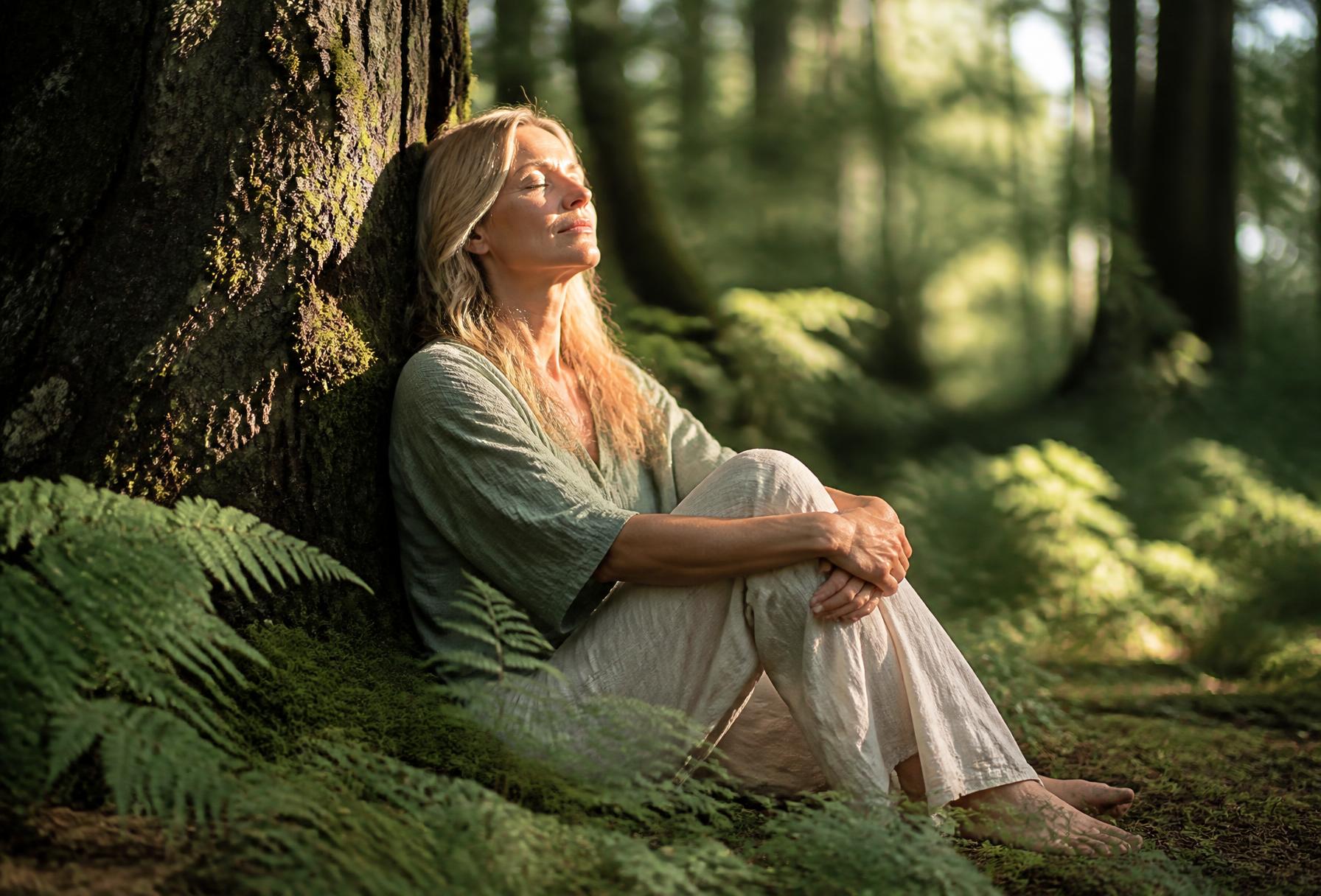
You know the feeling. You step outside after being cooped up for days, the sun hits your face, and something in your shoulders just... drops. You didn't do anything. You didn't take anything. You just stepped outside. And somehow, you feel more like yourself than you have in a week.
That's not a coincidence, and it's not just "fresh air." Let me break down what's actually happening in your body when that shift occurs — because there's real, fascinating science behind it, and it connects directly to the same system I talk about with cannabis: your endocannabinoid system.
Why does nature affect your ECS specifically?
Here's the piece almost nobody tells you. Dr. Ethan Russo — one of the most respected cannabinoid researchers in the world — proposed something called Clinical Endocannabinoid Deficiency: the idea that your endocannabinoid system has a baseline "tone," and when that tone runs low, real problems can follow — migraines, fibromyalgia, IBS, chronic pain, anxiety, and more have all been linked to measurably lower levels of your body's own endocannabinoids.[1]
Here's the part that matters for this article: Russo himself points to lifestyle and diet as real ways to influence that tone, not just cannabis products. And there's a growing body of research on exactly that — physical movement raises your levels of anandamide (your body's own "bliss molecule"), meditation and lifestyle changes measurably improve endocannabinoid tone,[2] and — maybe most tellingly — a study on COVID lockdowns found that isolation, reduced movement, and disconnection from normal life measurably disrupted people's endocannabinoid systems, worsening anxiety and stress responses in the process.[3]
Turn that around, and you get the thesis of this whole article: the things that make you feel more like yourself outdoors aren't just "nice." They may be quite literally restoring the same system cannabis works with.[4]
What forest bathing actually does to your body
The Japanese practice of shinrin-yoku, or "forest bathing," isn't mysticism — it's one of the more rigorously studied wellness practices out there. Time in forest environments has been shown to lower cortisol, shift your nervous system toward its calming "rest and digest" mode, and even boost natural killer cell activity — a real measure of immune function. Part of the mechanism appears to be phytoncides, natural airborne compounds trees release, which your body absorbs through skin and breath.[5]
What's actually moving between you and the tree
Phytoncides in, cortisol down, endocannabinoid tone up
Conceptual illustration. Forest environments have been shown to lower cortisol, shift the nervous system toward its calming state, and raise natural killer cell activity — with phytoncides, the airborne compounds trees release, as part of the mechanism.[5]
Sweden has taken this seriously enough to give it an official place in the national vocabulary — "skogsbad" — and Stockholm's Karolinska Institutet has published research showing that just 72 hours outdoors can meaningfully lower stress markers, blood pressure, and heart rate. The Scandinavian Nature and Forest Therapy Institute has spent over a decade building structured, evidence-informed methodology specifically for northern climates, and organizations like Treeming.org now offer accredited training for people who want to guide this practice professionally.[6]
Why sunshine isn't just about vitamin D
Everyone knows sunlight makes vitamin D. Fewer people know that sunlight also directly triggers serotonin production — the same "feel-good" neurotransmitter your brain relies on for mood regulation. Just 10–20 minutes of morning sunlight can meaningfully raise serotonin, help set your circadian rhythm for better sleep that night, and — through a separate pathway that doesn't even involve your skin — light entering your eyes signals your brain directly. This is part of why a cloudy stretch of days can genuinely affect your mood, and it's not "just in your head."[7]
The surprising science of water
There's an entire field of research now built around one deceptively simple observation: humans are calmer near water. Marine biologist Wallace J. Nichols coined the term "Blue Mind" to describe it, and the research backing it is real — peer-reviewed studies have found that proximity to coastlines and water is linked to genuine improvements in wellbeing, and physiological measures like heart rate, cortisol, and blood pressure shift favorably near water. This is why a walk by a creek, a lake, or yes, a waterfall, isn't just pretty scenery — your body is responding to it.[8]
What happens when we disconnect
Here's the flip side, and it's honestly the more sobering part. Most of us spend our days indoors, sedentary, staring at screens, cut off from sunlight, movement, and green space almost entirely. That COVID-lockdown research I mentioned earlier found this pattern directly disrupts endocannabinoid tone — worsening the very stress responses we're trying to calm.[3] Screens themselves aren't the enemy, but the absence of everything nature naturally provides — movement, sunlight, quiet, unstructured attention — takes a real, measurable toll.
Simple ways to start
None of this requires a retreat or a plane ticket. Real, research-backed starting points:
A 10–15 minute walk outside, ideally somewhere with trees or green space.
Morning sunlight on your face and arms before 10am — even just standing on a porch.
A hand on a tree trunk while you actually notice your breath for a minute. This isn't symbolism; it's a real sensory-grounding practice with research behind it.
Time near any body of water you have access to, even a small one.
One stretch of the day — even 20 minutes — with your phone somewhere else entirely.
Don't underestimate this — and don't rush it
Just like anything else I teach you about your body, this isn't instant, and it's not one dramatic hike that fixes everything. The research points toward consistency — regular, small doses of sunlight, movement, and nature exposure, not a single big trip. Give yourself real weeks of this, not days, before deciding whether it's making a difference. Your nervous system built up its current patterns over years; it deserves more than one walk to start unwinding them.[9]
Quick answers
- Do I need to be in a "real" forest for this to work?
- No. Research on green space benefits extends to parks, tree-lined streets, and even houseplants when a full forest isn't accessible — depth of attention matters more than distance.
- How is this connected to cannabis and the ECS specifically?
- Cannabinoids interact with the same endocannabinoid system that lifestyle factors like movement, sunlight, and nature exposure appear to influence — Dr. Russo's own research points to both as real levers on the same underlying system.
- Is there real science here, or is this just "nature is nice"?
- Real, peer-reviewed research: Karolinska Institutet's stress studies, published cortisol and immune-function data on forest bathing, and controlled research on water proximity (“Blue Mind”) and serotonin/sunlight pathways all back this up.
- Do I need special equipment or a guide?
- No — though structured programs exist (like Treeming.org's guide training) for people who want a deeper, guided practice.
There is real healing available to you here — and unlike a lot of things I write about, this one is free, accessible today, and doesn't come with a dosing chart. You just have to actually go outside.
— The Cannabis Nurse · Theresa Strahan, BSN, RN, CNHC
Educational disclaimer
This article is educational and is not individualized medical advice. Lifestyle practices like time outdoors are not a substitute for treatment of anxiety, depression, chronic pain, or any other diagnosed condition. Talk with a qualified healthcare provider about your own situation.
References & research resources
- Russo EB. Clinical Endocannabinoid Deficiency Reconsidered. Cannabis and Cannabinoid Research. 2016;1(1):154-165.
- CannaKeys — Endocannabinoid Tone; Modulators of the Endocannabinoidome (exercise, meditation, and lifestyle effects on e-tone). Accessed August 2026.
- Brugnatelli V, Facco E, Zanette G. Lifestyle Interventions Improving Cannabinoid Tone During COVID-19 Lockdowns. Frontiers in Psychiatry. 2021;12:565633.
- Sparling PB, et al.; Charytoniuk T, et al. Exercise and endocannabinoid (anandamide) response research.
- Forest bathing (shinrin-yoku) research: cortisol, NK cell activity, and stress-response systematic reviews, PMC; Karolinska Institutet outdoor stress research, via Visit Sweden.
- Scandinavian Nature and Forest Therapy Institute (SNFTI); Treeming.org Forest Bathing Guide Certification.
- Sunlight, vitamin D, and serotonin pathway research, multiple peer-reviewed sources.
- Nichols WJ. Blue Mind. White MP, et al. Coastal proximity, health and well-being: Results from a longitudinal panel survey. Health & Place. 2013;23:97-103.
- Realm of Caring Foundation — individualized, lifestyle-inclusive approach to wellness. Accessed August 2026.
- MJBiz/MJBizDaily — 2026 cannabis and holistic wellness industry trend reporting.
- Additional scientific lineage: Raphael Mechoulam and colleagues' foundational endocannabinoid research, Hebrew University of Jerusalem.
Keep going: stress, the ECS & calm
- How to Wake Up Your Endocannabinoid System — The Good, the Bad, and the Real Deal
- This One's for the Ladies — How Your Ovaries Make Their Own Cannabis-Like Molecule
- You're Not Broken. You've Just Been Running on Stress Too Long.
- Why Weight Loss Can Feel Impossible: Inflammation, Insulin Resistance, Berberine, and Where CBD May Fit