How to Wake Up Your Endocannabinoid System — The Good, the Bad, and the Real Deal
What actually raises your body's own cannabis-like molecules — without a dropper or a gummy anywhere in sight
by The Cannabis Nurse · Theresa Strahan, BSN, RN, CNHC
Read on Medium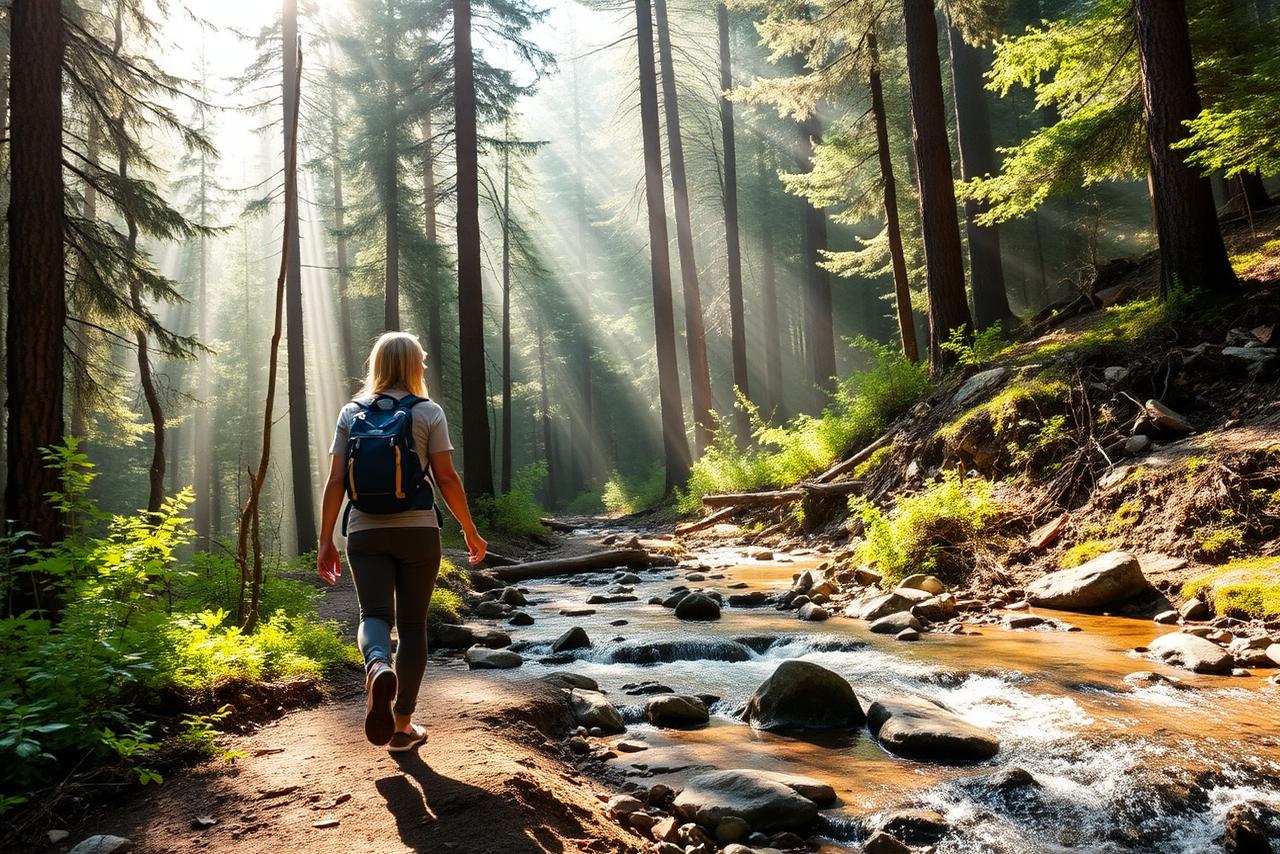
As part of my professional journey — thirty years as a registered nurse — I'm now teaching people about CBD and THC: how to dose them, how to choose them, why they work the way they do. CBD and cannabis were introduced into my nursing journey in the latter part of my career, and it's been one of the most fulfilling chapters of that journey. What I bring to this new and exciting part of my healthcare education is three decades of clinical nursing experience and a genuine, ongoing hunger to understand this system as deeply as I can.
While building educational material to help the public understand this system, I started noticing something I didn't expect: the calmest, clearest version of me almost never shows up because of a product. It shows up because of a Saturday morning at the beach, a hard hike in the woods, a cold ocean wave I wasn't quite ready for, or twenty quiet minutes with my eyes closed and my phone somewhere else entirely.
That bothered me at first, honestly. Wasn't I supposed to be The Cannabis Nurse? But the more I dug into the actual research, the more it made complete sense — and I think it's the single most important thing I can teach you, more than any dosing chart. Cannabis works because it plugs into a system your body already has and already runs on its own: the endocannabinoid system, or ECS. And it turns out there's a whole list of things — some obvious, some genuinely surprising — that wake that system up without a dropper or a gummy anywhere in sight.
Let me walk you through the real science — the good, the bad, and the real deal.
Where this all actually started
This whole field exists because of one university, and I think it matters that you know that, because it's not some vague "studies show" — it's a real, traceable lineage. In 1964, an Israeli chemist named Raphael Mechoulam, working at the Hebrew University of Jerusalem, isolated THC for the first time and identified its chemical structure. He didn't stop there. He went on to help discover your body's own cannabis-like molecules — anandamide and 2-AG — the ones cannabis actually mimics. A colleague of his at the same university, Lumír Hanuš, later co-discovered a second one. That university still runs one of the world's leading cannabinoid research centers today, with more than thirty labs working across cancer, pain, stress, metabolism, and neuroscience.[1]
I bring this up because I think it's easy to hear "endocannabinoid system" and assume it's marketing language dressed up in science. It isn't. It's one of the most significant discoveries in modern physiology, and it happened at a real university, by real scientists, and it's still being actively studied today.
The good: what actually raises your endocannabinoid levels
Here's where it gets genuinely exciting — because these aren't vague wellness claims. They're measurable changes in real human blood work.
Movement
Here's something that upended decades of assumption: that famous "runner's high" people talk about? Research now points to anandamide, not endorphins, as the real driver. Medium-to-high intensity exercise measurably raises anandamide levels — even 30 minutes is enough to show a real increase. Your body has been rewarding you with this feeling your whole life; most of us just never knew the actual mechanism.[3]
Sunlight — and this one surprised even me
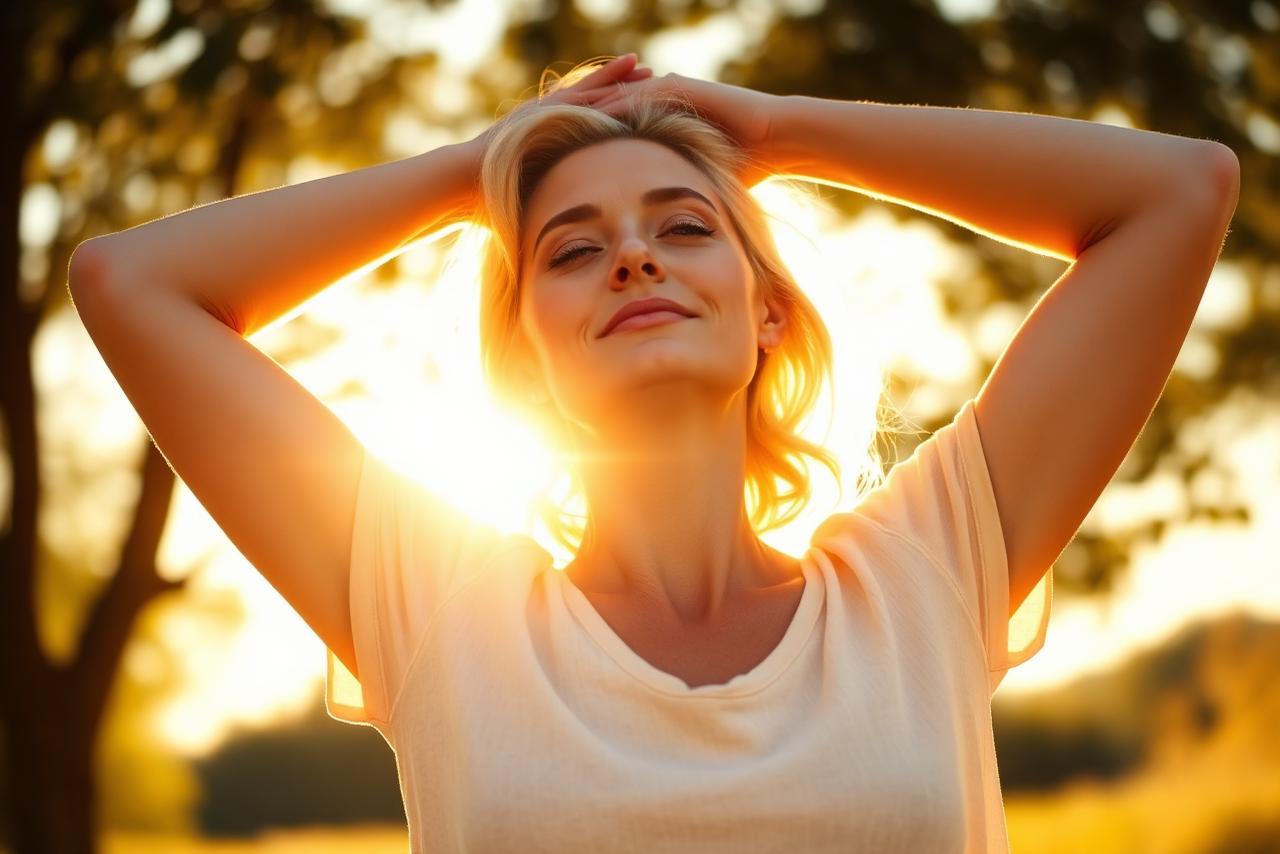
A published human study exposed sixteen healthy adults to repeated, low-level summer sunlight over six weeks and took actual blood samples. The result: 2-AG levels rose measurably during the exposure period, peaking around weeks two and three. That's not animal data or theory. That's real human blood work showing sunlight directly raises one of your two primary endocannabinoids. On top of that, endocannabinoids follow their own daily rhythm tied to light and dark, and sunlight separately boosts serotonin — so morning light is doing at least two, maybe three, different jobs for you at once.[4]
Cold exposure
Research shows cold exposure increases endocannabinoid levels and the density of CB1 receptors, and stimulates the vagus nerve — the direct communication line between your gut and your brain. You don't need an ice bath; even finishing a shower with thirty seconds of cold water taps into this.[5]
Meditation — the most striking number in all of this research
A real study measured actual blood biomarkers before and after a four-day meditation retreat. Anandamide, 2-AG, and related endocannabinoids rose by more than 70 percent, with reductions in anxiety and depression that held a full month later. Seventy percent, from sitting still and breathing.[6]
Diet
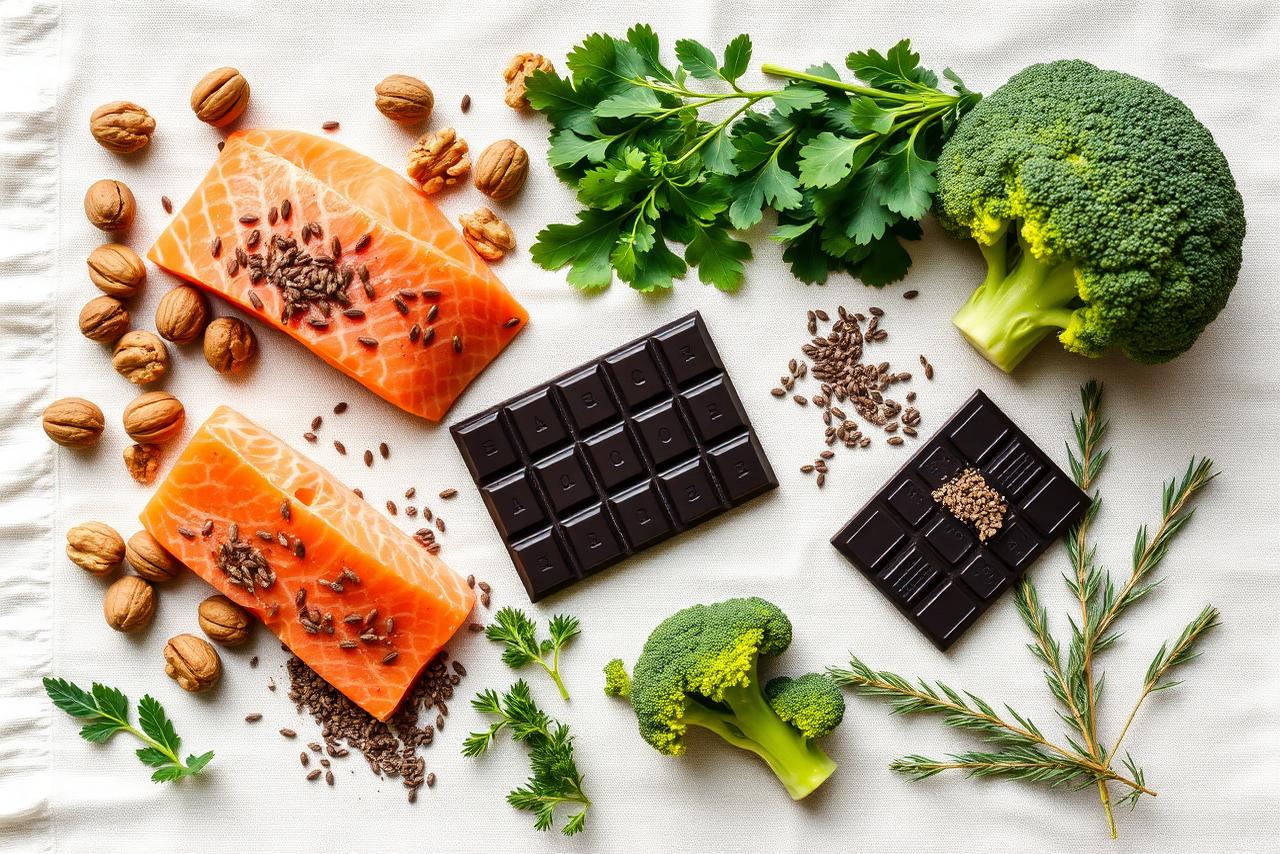
Omega-3 fatty acids are literal building blocks your body uses to synthesize both anandamide and 2-AG — not just "good for you" in a vague way, but structural raw material. Foods rich in a compound called beta-caryophyllene — leafy greens, broccoli, oregano, rosemary — activate CB2 receptors directly. And, a small, true delight of a detail: dark chocolate contains compounds that slow the breakdown of anandamide, which is part of why it genuinely makes you feel good, not just habit.[7]
What moves your endocannabinoid tone
The same system, pulled up or pushed down
Conceptual illustration. Research shows movement, sunlight, cold exposure, meditation, and omega-3 fatty acids measurably raise endocannabinoid levels, while chronic stress, isolation, and disrupted routine lower them.[2]
The bad: what tears this system down
Chronic stress isn't just unpleasant — it's measurably destructive to this exact system. Sustained high cortisol downregulates CB1 receptors and lowers your baseline endocannabinoid levels. There's real research on this from an unexpected place: studies on COVID lockdowns found that prolonged isolation, disrupted routine, and loss of normal movement and stimulation measurably disrupted endocannabinoid tone, worsening the very anxiety and stress responses people were already struggling with.[8]
This is where a researcher named Dr. Ethan Russo comes in, someone I consider one of the most important minds in this field. He proposed something called Clinical Endocannabinoid Deficiency — the idea that your ECS has a baseline "tone," and when that tone runs chronically low, real problems follow: migraines, fibromyalgia, IBS, chronic pain, anxiety, and more have all been linked to it. What matters most for this article is that Russo himself points to lifestyle, not just cannabis, as a lever on that tone.[2]
The real deal: the honest gaps and the access problem
I want to be straight with you here, because I don't want to oversell any of this. Not everyone can just go outside. Some people are dealing with limited mobility, chronic illness, or homes where getting to a window, let alone outdoors, isn't simple. During my home health nursing years, I've been in some of those homes myself. So let's talk about the accessible version of this, honestly.
Sitting by a window helps — but it isn't the same as being outside
Standard window glass blocks nearly all UVB and reduces a good portion of UVA too. The human study that showed sunlight raising 2-AG used real, unfiltered light on skin — that exact effect hasn't been tested through glass, so I can't honestly promise you the same result. What window light does still do is support your circadian rhythm and serotonin through visible light — genuinely useful, just not the full picture. And there's an intensity problem too: outdoor daylight commonly reaches 10,000 to 100,000 lux, while light just a few feet inside near a window can be ten to fifty times dimmer.[10]
Light therapy lamps are a real, well-studied treatment — not a consolation prize
The kind of lamp used for seasonal darkness, like in parts of Alaska or Scandinavia, has real evidence behind it. A meta-analysis of 19 randomized controlled trials involving over 600 patients found bright light therapy meaningfully outperformed placebo for depression. A large 2024 study published in JAMA Psychiatry found a 41 percent remission rate for non-seasonal depression using bright light therapy — significantly better than comparison treatments. The standard protocol is well-established: 10,000 lux, thirty minutes, in the morning, about eight inches from your eyes, using a lamp specifically designed to filter out UV light (not a tanning lamp or a skin-therapy UV device — that's a different, riskier thing entirely). I'll be honest that no study has yet directly measured whether these lamps raise anandamide or 2-AG the way natural sunlight does — that specific link hasn't been tested. But the mood and circadian benefits are genuinely proven, and for someone who truly can't get outside, this is a real, medically legitimate option, not a lesser substitute.[9]
Sweden takes this seriously too
They've built an entire cultural and medical relationship with light and nature exposure — "skogsbad," forest bathing, is part of their official national vocabulary, and Stockholm's Karolinska Institutet has published research showing measurable stress reduction from time spent outdoors, even in a famously dark, cold climate. If a country that loses months of daylight every winter takes this seriously enough to build research institutes and national practices around it, that tells you something.[11]
Bringing it back to my own Saturdays
I told you once about the six-hour round trip my husband and I make for three or four hours at the beach. I still don't have a perfectly tidy explanation for why I do it, but I understand it better now than I used to. It's not one thing. It's sunlight raising my 2-AG. It's the ocean doing whatever "Blue Mind" research says it does to cortisol and heart rate.[12] It's the deliberate disconnection — phone in the glovebox — protecting the ECS tone that constant notifications quietly chip away at. It's movement, walking the shoreline, maybe even the anandamide bump from that.
None of it is one silver bullet. All of it is the same system, being asked to do the job it was actually built for.
Where to actually start
This isn't instant, and I don't want to pretend it is. Give any of this real weeks, not days, before deciding whether it's doing anything — that's true of everything I teach, cannabis or otherwise. Your body built its current patterns over a long time. It deserves more than a few days to start changing them.
Morning sunlight, even 10–15 minutes, ideally outdoors — the one with the most direct evidence.
Movement — medium-to-high intensity, most days; even a brisk 30-minute walk counts.
A few minutes of meditation or quiet stillness, especially if four consecutive days ever feels possible.
Cold water at the end of a shower, if you're willing to try it.
Omega-3-rich foods and, sure, a little dark chocolate — I'm not going to be the nurse who takes that away from you.
If you can't get outside: a proper 10,000-lux light therapy lamp used correctly, or at minimum, time by the brightest window you have.
Protecting your stress levels as seriously as you'd protect a physical injury — this system responds to chronic stress the way a wound responds to being reopened before it heals.
There is real, well-documented healing available in all of this — some of it costs nothing at all. You just have to know where to look, and how to actually use it.
The calmest, clearest version of you almost never shows up because of a product. It shows up because you gave your body the conditions it was built for.
— The Cannabis Nurse · Theresa Strahan, BSN, RN, CNHC
Quick answers
- Do I need cannabis or CBD to wake up my endocannabinoid system?
- No. Every lever in this article — movement, sunlight, cold, meditation, diet — raises your body's own endocannabinoid levels without any product. Cannabis works because it plugs into a system your body already runs on its own.
- What's the single most important thing to start with?
- Morning sunlight outdoors has the most direct human evidence behind it — a real blood-work study showed it measurably raises 2-AG. Even 10–15 minutes counts.
- Is there real science here, or is this just 'nature is nice'?
- Real, peer-reviewed research: a human study measuring 2-AG after sunlight, a four-day meditation retreat showing a 70% rise in endocannabinoids, exercise-and-anandamide research, omega-3 as a structural precursor, and Dr. Ethan Russo's Clinical Endocannabinoid Deficiency framework all back this up.
- What if I can't get outside because of mobility or where I live?
- Window light helps your circadian rhythm but doesn't deliver the full UV effect. A 10,000-lux light therapy lamp is a real, well-studied medical option — meta-analyses and a 2024 JAMA Psychiatry study back it — even though no one has yet directly tested whether it raises anandamide the way natural sunlight does.
Educational disclaimer
This article is educational and is not individualized medical advice. Lifestyle practices like time outdoors, cold exposure, or light therapy are not a substitute for treatment of anxiety, depression, chronic pain, or any other diagnosed condition. Talk with a qualified healthcare provider about your own situation.
References & research resources
- Mechoulam R, et al. Foundational cannabinoid and endocannabinoid discoveries, Hebrew University of Jerusalem. Hanuš L, et al. Co-discovery of 2-arachidonyl glyceryl ether. Multidisciplinary Center for Cannabinoid Research (MCCR), Hebrew University of Jerusalem — current research program.
- Russo EB. Clinical Endocannabinoid Deficiency Reconsidered. Cannabis and Cannabinoid Research. 2016;1(1):154-165. CannaKeys — Endocannabinoid Tone; Modulators of the Endocannabinoidome. Accessed August 2026.
- Sparling PB, et al. Exercise and anandamide / 'runner's high' research.
- Serum endocannabinoids and the influence of simulated solar UVR exposure in humans in vivo. Photochemical & Photobiological Sciences (PubMed).
- Cold exposure and endocannabinoid / CB1 receptor density research; vagus nerve stimulation research.
- Inner Engineering / meditation retreat study: increased endocannabinoids and sustained mental health improvement. PMC.
- Omega-3 fatty acids as endocannabinoid precursors; beta-caryophyllene and CB2 receptor research; dark chocolate and anandamide breakdown research.
- Brugnatelli V, Facco E, Zanette G. Lifestyle Interventions Improving Cannabinoid Tone During COVID-19 Lockdowns. Frontiers in Psychiatry. 2021;12:565633.
- Bright light therapy meta-analysis (19 RCTs, 610 patients), PubMed; JAMA Psychiatry 2024 bright light therapy for non-seasonal depression.
- Window glass UV transmission and indoor lux research.
- Forest bathing (shinrin-yoku) and Karolinska Institutet outdoor stress research; Scandinavian Nature and Forest Therapy Institute.
- Nichols WJ. Blue Mind. White MP, et al. Coastal proximity and well-being research. Health & Place.
Free companion card
Reset Your ECS: 6 Ways to Wake Up Your Body's Own System
Everything above, on one printable page you can stick on the fridge — plus the two supplements I reach for myself.
Get the free cardKeep going: the ECS, stress & calm
- This One's for the Ladies — How Your Ovaries Make Their Own Cannabis-Like Molecule
- You're Not Broken. You've Just Been Running on Stress Too Long.
- Why Weight Loss Can Feel Impossible: Inflammation, Insulin Resistance, Berberine, and Where CBD May Fit
- CBD and Chronic Pain: Why Isn't It Discussed More Often?