Do You Actually Know How Much CBD or THC You're Taking?
Breaking through the confusion around milligrams, ratios, percentages and spectrum labels — and finding your own therapeutic sweet spot
by Theresa Strahan, BSN, RN, CNHC · The Cannabis Nurse
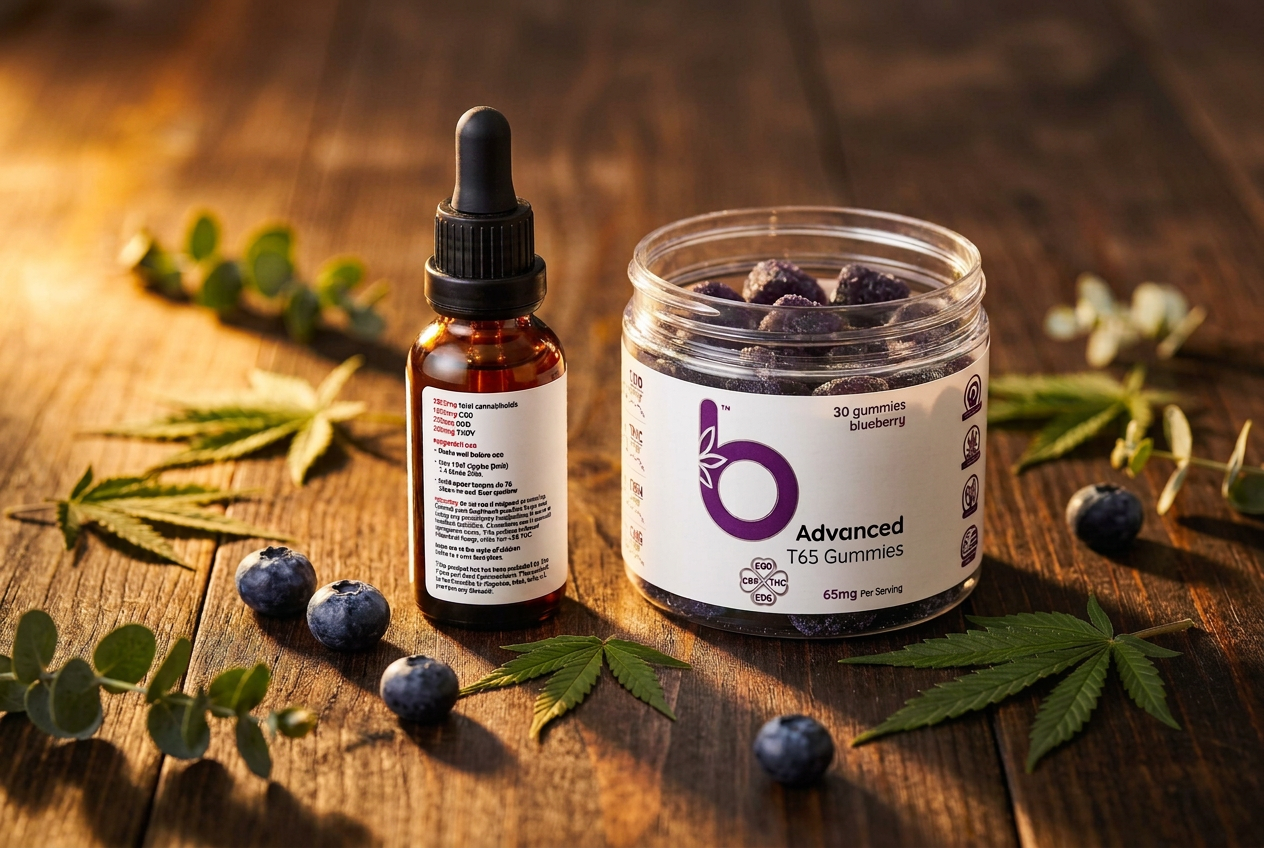
Walk into almost any CBD shop or cannabis dispensary and you can be hit with a wall of numbers: 1,500 mg CBD, 25 mg per gummy, 20:1, 5:1, 1:1, 22% THC, full-spectrum, broad-spectrum, isolate. For a person who is simply trying to sleep better, hurt less, calm an overactive nervous system, or understand whether cannabis might fit into a larger wellness plan, the language can feel unnecessarily complicated.
And that confusion matters. People are already using these products. Some are brand new to cannabis, but many are not. They may have used CBD for months, smoked cannabis flower for years, or purchased gummies and tinctures without ever being shown how to translate the label into an actual dose. Research supports that this is a real consumer problem: in a large U.S. and Canadian survey, relatively few cannabis consumers could accurately report the numerical THC or CBD content of the products they usually used.[1]
The goal of this article is not to turn you into a cannabis pharmacologist. It is to give you enough understanding to look at a product and answer three practical questions: What is in this? How much am I actually taking? And what is my body telling me about that amount?
The Cannabis Nurse says: more is not automatically better. The useful dose is the one that helps you move toward a meaningful outcome without creating new problems.
Start with the simplest number: milligrams
For tinctures, gummies, capsules and other measured products, cannabinoids are commonly expressed in milligrams (mg). Milligrams tell you an amount. But the number printed in the largest type on the front of the package may describe the entire container rather than a single serving.
Imagine a tincture labeled 1,500 mg CBD. That sounds enormous until you turn the bottle around and learn that the bottle contains 30 servings. Divide 1,500 mg by 30 servings and you have 50 mg CBD per serving. If your actual serving is one-half of the manufacturer's listed serving, you are taking about 25 mg.
This is why I want consumers to develop the habit of turning the bottle around. Find the total amount of CBD and THC in the container. Find the serving size. Find the number of servings. Then find — or calculate — the milligrams of each cannabinoid in the amount you are actually using.
This sounds basic, but it is one of the most important skills in cannabis self-education. If you do not know how many milligrams you are taking, it becomes very difficult to understand why one product feels different from another, or why a dose change helped, did nothing, or made you uncomfortable.
Ratios tell you the relationship — not the dose
Ratios describe the relationship between cannabinoids. If the label is written CBD:THC, a 20:1 product contains twenty parts CBD for every one part THC. A 5:1 product contains five parts CBD for every one part THC. A 1:1 product contains equal amounts.
But the ratio alone does not tell you the dose. A 1:1 product could contain 1 mg CBD and 1 mg THC per serving. Another 1:1 product could contain 10 mg CBD and 10 mg THC. Same ratio — one delivers ten times as much of each cannabinoid.
That distinction matters when someone says, "I tried a 1:1 and it was too strong," or "A 20:1 didn't work for me." My next question is always: How many milligrams? Without that number, we are missing a major piece of the story.
There is no single scientifically established CBD:THC ratio that is universally correct for pain, anxiety or sleep. Clinical consensus papers offer titration approaches, not one prescription that fits everyone.[2][3] Dosing resources similarly organize cannabinoids into broad dose ranges rather than fixed answers.[4]
What "starting low and going slow" really looks like
Instead of suddenly "feeling CBD," you may notice that you stood at the kitchen counter longer. You may realize you walked through the grocery store without thinking about your knee every few steps. You may notice that your shoulders were not sitting up around your ears all afternoon.
Realm of Caring currently suggests 25–50 mg of CBD daily, divided into two or three administrations, as a general adult starting framework, and advises waiting about 7–10 days of consistent dosing before increasing when appropriate.[5] Other resources place 20–99 mg CBD in a broad "medium dose" category while also showing how wide the studied dose range can be.[4] Those ranges illustrate variability; they do not establish a universal therapeutic dose.
Consistency is key. If you take CBD Monday, forget it Tuesday, take twice as much Wednesday, skip Thursday and change products Friday, you have created so many variables that it becomes difficult to know what your body is responding to.
CBD exposure also varies with formulation, route, and whether it is taken with food. Human pharmacokinetic research has found substantial variability in CBD absorption, and food can meaningfully affect exposure.[6] So consistency means more than remembering to take it — take it in a similar way, and track what you are doing.
"I forgot to take my usual pain reliever this morning because I wasn't thinking about my pain." That kind of quiet change can be more useful than chasing a dramatic feeling.
Full-spectrum, broad-spectrum and isolate
Spectrum language describes the cannabinoid mixture in the product; it does not tell you the dose.
- Full-spectrum: CBD along with other naturally occurring plant compounds, and may contain measurable THC.
- Broad-spectrum: CBD and other plant compounds with THC removed or reduced.
- CBD isolate: highly purified CBD without the broader cannabinoid mixture.
The practical point is that the words on the front of the bottle are not the end of the investigation. If avoiding THC matters to you — because you are sensitive to it, subject to workplace drug testing, or simply do not want it — look at the current Certificate of Analysis (COA), the laboratory report for that product or batch.
Broad-spectrum should not be treated as a magical promise that no detectable THC can ever be present. Manufacturing processes and testing limits vary. The COA gives you much more useful information than marketing language alone. If this is new to you, my guide to choosing a quality CBD product walks through the full label checklist.
A real-world example: reading a COA
Because abstract numbers are harder to learn from, let's look at a real product example. Bloom Hemp is an affiliate partner of The Cannabis Nurse, so I may earn a commission if someone purchases through my affiliate link. I am using the product here because a real laboratory report gives us something concrete to read together — not because everyone needs this particular product.
A September 2025 Certificate of Analysis for Bloom Hemp's 1200 mg Full Spectrum Natural Tincture reported 1,214.99 mg of CBD and 28.25 mg of delta-9 THC in the tested unit, along with smaller amounts of CBC, CBDA, CBDV, CBG and CBN. The report calculated total potential CBD at 1,232.881 mg.[7]
That immediately teaches us more than the phrase "full-spectrum." We can see that CBD is the dominant cannabinoid. We can confirm that THC is present. We can also see that other cannabinoids were detected. If you were comparing this with another tincture, you would now have actual numbers to compare rather than relying on package design.
One caution: use the COA that matches the product and batch you actually have. Formulations and batches change. A laboratory report from last year should not be treated as permanent proof of what is in the bottle you bought today.
Percentages are a different language
Cannabis flower is commonly labeled by percentage. If flower is labeled 20% THC, that describes concentration in the plant material. It does not mean that smoking or vaporizing it delivers a precise 20 mg dose to your body.
The amount actually delivered depends on how much flower is used, how it is heated, the device, inhalation technique, loss during combustion or vaporization, and individual physiology. That makes inhaled cannabis much harder to translate into an exact milligram dose than a measured oral product.
This matters when someone is using high-potency flower for anxiety, sleep or pain and keeps increasing use because they believe more THC should produce more relief. The experience may become stronger while the therapeutic outcome does not improve — and in some people anxiety, racing thoughts, dizziness or rapid heart rate may worsen.
Your therapeutic sweet spot is about function, not sensation
I think of a therapeutic sweet spot as the lowest practical amount and combination that moves you toward the outcome you actually care about while keeping unwanted effects acceptable. That is not a laboratory definition; it is a useful way to think about self-observation.
The endocannabinoid system is one reason cannabis effects are not simply "more cannabinoid equals more benefit." THC acts primarily through cannabinoid receptors, particularly CB1, while CBD has a more complex pharmacology and does not simply behave like a weaker version of THC. If you want the deeper background, I cover it in why stress affects everything: your nervous system and the ECS.
For you as a consumer, the practical translation is simple: do not judge a product only by how strongly you feel it. Judge it by what changed. Did you sleep longer? Wake fewer times? Could you stand long enough to cook dinner? Did the burning in your feet become less intrusive? Were you able to take the dog around the block? Did you feel calmer without feeling impaired?
The Cannabis Nurse says: listen to your body. An increase in unwanted symptoms is information. It may mean the dose, ratio, timing, route or even the product itself needs to be reconsidered.
Route of administration changes the experience
A tincture, a gummy and an inhaled product do not behave the same way. Inhaled THC generally begins acting much faster. Oral products take longer to produce effects and can last longer. That delay is one reason people sometimes take another gummy because "nothing is happening," only to discover later that both servings are taking effect.
Before increasing a dose, ask whether you have actually allowed enough time for that route to show you what the current dose is doing. This is especially important with THC-containing edibles. Ten milligrams of THC inhaled is not automatically experienced the same way as a 10 mg edible. Route, metabolism and timing matter.
A practical way to adjust without creating more confusion
If you are trying to understand your response, change one variable at a time whenever possible. If you change the product, dose, ratio and time of day all at once, you may feel different but have no idea which change caused it.
Write down what you took: the CBD milligrams, THC milligrams, ratio, product and route. Then identify one or two outcomes you care about — not twenty. Maybe your goal is to stand for 20 minutes without needing to sit down. Maybe it is to fall asleep without lying awake for two hours. Maybe it is to make it through an afternoon without anxiety controlling every decision.
Give the plan an appropriate amount of time. CBD often requires a different evaluation window than inhaled THC. And if a dose makes you feel worse, you do not have to "push through" because someone online told you that was the therapeutic amount. Back up. Reassess. Your response is data.
What about medication interactions?
CBD and THC can interact with medications, and this deserves its own full article rather than a frightening paragraph tacked onto the end of a dosing discussion. CBD in particular can affect drug-metabolizing enzymes, including CYP pathways, and clinically important interactions have been documented with some medications, especially antiepileptic and psychiatric drugs.[4]
For this article, the rule is simple: if you take prescription medications — especially medications with a narrow therapeutic window — do not assume that an over-the-counter CBD product is automatically interaction-free because it is "natural." Bring the actual product and dose to a pharmacist, prescribing clinician or appropriately qualified cannabis clinician who can review the combination.
That is not meant to scare you away from CBD or cannabis. It is the same medication reconciliation we should be doing with supplements, herbs and prescription drugs. Good cannabis education includes safety without turning safety into fear.
Before you buy or change your dose, ask these questions
- Can I identify the milligrams of CBD and THC in the amount I am actually taking?
- Do I understand whether the ratio is written CBD:THC or THC:CBD?
- Do I know whether the product is full-spectrum, broad-spectrum or isolate?
- Have I checked the current COA?
- What am I actually trying to improve?
- Have I used the product consistently enough to evaluate it?
- Am I changing one variable at a time?
- Have I considered my medications and medical history?
If you can answer those questions, you are already making a more informed decision than simply grabbing the strongest bottle on the shelf.
The bottom line
CBD and THC dosing does not need to be reduced to guesswork, but it also cannot honestly be reduced to one perfect chart. The research is still developing, products differ, and people respond differently.
Milligrams tell you how much. Ratios tell you the relationship. Percentages tell you concentration. Spectrum terminology tells you what kind of cannabinoid mixture the product is intended to contain. The COA helps you verify what was actually measured. Then comes the part no label can do for you: paying attention to your own response.
Start low. Go slow. Be consistent. Listen to your body. And look for the quiet evidence that something meaningful may be changing — a longer walk, a better night's sleep, less time thinking about pain, or one more piece of your day that feels like yours again.
Because the goal isn't perfection. The goal is reclaiming the parts of life that pain, illness, fear and limitations may have taken away.
— Theresa Strahan, BSN, RN, CNHC · From The Cannabis Nurse
The CBD + THC Dose Decoder
A one-page reference you can keep on your phone or print and take with you when you shop. Use it to translate the label into milligrams, identify the ratio and spectrum type, and write down what you are actually trying to improve.
Once you can read a label, the next question is who to buy from. These are the brands I use and trust — the ones that publish a real COA for every batch.
Educational disclaimer
This article is educational and is not individualized medical advice. CBD and THC can cause side effects and interact with medications. Cannabis laws vary by jurisdiction. Do not drive or operate machinery while impaired. Seek individualized professional guidance when medication use, pregnancy or breastfeeding, significant medical conditions, or concerning symptoms make it appropriate.
References & research resources
- Bonn-Miller MO, et al. Knowledge of Tetrahydrocannabinol and Cannabidiol Levels Among Cannabis Consumers in the United States and Canada. Cannabis and Cannabinoid Research. PMID: 33998866.
- Bhaskar A, et al. Consensus recommendations on dosing and administration of medical cannabis to treat chronic pain: results of a modified Delphi process. Journal of Cannabis Research. 2021;3:22. PMID: 34215346.
- Sihota A, et al. Consensus-based recommendations for titrating cannabinoids and tapering opioids for chronic pain control. International Journal of Clinical Practice. PMID: 33249713.
- CannaKeys. Cannabis THC:CBD ratios and dosing considerations; interaction and condition research resources. Accessed August 2026.
- Realm of Caring Foundation. Adult Dosing Calculator and Dosing & Administration educational resources. Accessed August 2026.
- Silmore LH, et al. Food effects on the formulation, dosing, and administration of cannabidiol (CBD) in humans: a systematic review of clinical studies. Pharmacotherapy. 2021;41(4):405–420. PMID: 33583102.
- Bloom Hemp / SC Laboratories. Bloom Hemp 1200 mg Full Spectrum Natural Tincture Certificate of Analysis. Reported September 5, 2025.
Additional scientific lineage: Raphael Mechoulam and colleagues' foundational cannabinoid and endocannabinoid research at the Hebrew University of Jerusalem.